 English
 French
 German
 Italian
 Portuguese
 Spanish
In today’s business environment, spaces such as office campuses, logistics centers, and hotel exteriors face growing challenges: rising electricity bills and increasing sustainability requirements. Traditional external lighting systems often involve cumbersome installation, complex wiring, and high maintenance costs, leaving many businesses trapped in a cost dilemma. Worse still, these systems frequently lack reliability in harsh weather conditions or remote areas, potentially creating safety hazards such as accidents caused by inadequate lighting or vulnerabilities in perimeter security.
Fortunately, modern commercial solar wall lights offer an efficient, high-ROI solution. These fixtures harness solar technology to operate with zero electricity costs while integrating advanced adaptive lighting features—such as smart sensors and adjustable modes—to ensure long-term stability and safety. By reducing energy consumption, businesses can significantly lower their carbon footprint, aligning with global sustainability standards such as LEED certification.
This guide is tailored for project managers and procurement professionals in the research phase, helping you make informed decisions based on technical specifications. We focus on four core technical pillars for selecting commercial solar wall lights: Brightness (Lumens), Protection (IP Rating), Intelligence (PIR), and Durability (Materials). Through this analysis, you’ll learn how to evaluate product performance, avoid common procurement pitfalls, and select optimal solutions for your 2025 projects.
Core Pillar 1: Lumens (lm) — Matching the “Just Right” Brightness for Your Space
Brightness is one of the primary considerations when procuring solar wall lights, as it directly affects lighting performance, safety, and energy efficiency. Many buyers mistakenly equate lumens with wattage, which often leads to incorrect selections. This section explains the true role of lumens and provides scenario-based selection criteria for commercial environments.
Why Focus on Lumens, Not Watts?
Lumen (lm) is the international standard measuring the total visible light output of a light source—its actual brightness. Wattage (W), on the other hand, only indicates energy consumption. While traditional lighting often correlates wattage with brightness, solar lighting does not: efficient LEDs and photovoltaic technology enable high lumen output at low wattage.
For B2B clients, high lumen efficacy means extended battery runtime, especially during overcast days or in regions with limited sunlight. This not only enhances system reliability but also lowers operational energy costs.
More importantly, proper brightness directly impacts safety. High-lumen lighting helps deter intruders and ensures clear nighttime visibility for CCTV systems. Research indicates that insufficiently bright lighting may increase security risks by 20–30%, while high-lumen products substantially reduce these hazards.
For example, many models in Sottlot’s product lineup use LEDs with Ra>70, ensuring natural lighting and avoiding the inefficiencies of low-quality light sources.
Lumen Selection Criteria for Commercial Applications
Brightness requirements vary across commercial scenarios. Overly bright fixtures may cause energy waste and light pollution, while insufficient brightness compromises functionality. Here is a practical classification:
Ambient & Pathway Lighting (300–700 lm)
Suitable for landscape decoration, pedestrian walkways, or building façade accents. These areas prioritize aesthetics and wayfinding.
Examples: DOME SWL-38 (700 lm), MESA ESL-83 (700 lm)
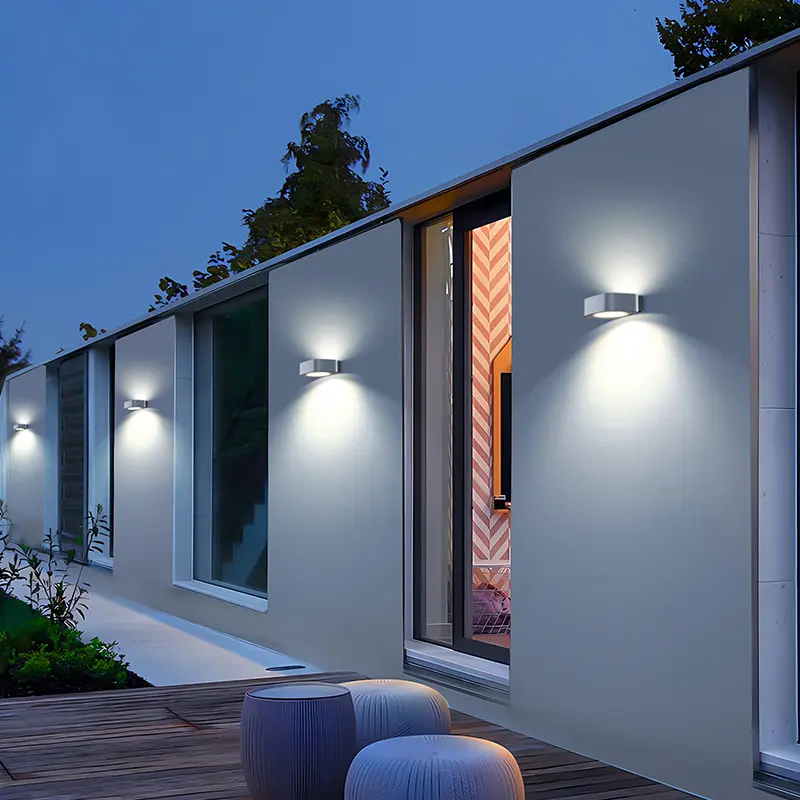
Entrances & General Security (700–1000 lm)
Designed for entrances, loading zones, parking perimeters, or exterior walls.
Examples: CUBE SWL-25 (1000 lm), MESA ESL-63S (1000 lm)
Wide-Area & High-Security Zones (1000+ lm)
Ideal for logistics yards or perimeter fences requiring strong illumination.
Examples: MARS2 SWL-12D (2000 lm)
Pro Tip: Calculate space area and installation height—10–20 lm/m² is typically recommended.
Core Pillar 2: IP Rating — Ensuring Outdoor Reliability
Outdoor lighting must withstand rain, dust, and extreme weather. IP ratings are critical for evaluating reliability. Ignoring this factor increases maintenance needs and long-term project costs.
Decoding IP Ratings (IP44, IP54, IP65)
IP (Ingress Protection) is an IEC standard measuring dust and water resistance.
-
Dust Protection: Level 4 (objects >1mm), Level 5 (partial dust protection), Level 6 (dust-tight)
-
Water Resistance: Level 4 (splash-proof), Level 5 (low-pressure jets), Level 6 (high-pressure jets)
A higher IP rating protects internal components such as batteries and LEDs from corrosion. Based on Sottlot test data, IP65-rated products operate 2–3 years longer in simulated harsh environments.
IP Rating Selection Guide
IP44 (Splash-proof):
For sheltered areas or mild climates.
Examples: OMEGA SWL-52, MANTIS SWL-39
IP54 (Dust/Splash-Resistant):
A standard choice for general outdoor use.
Examples: MARS1 SWL-11D, CUBE SWL-18
IP65 (Dustproof/Splashproof):
Ideal for heavy rain, coastal regions, and industrial zones.
Examples: CUBE SWL-25, BELL SGL-21WA
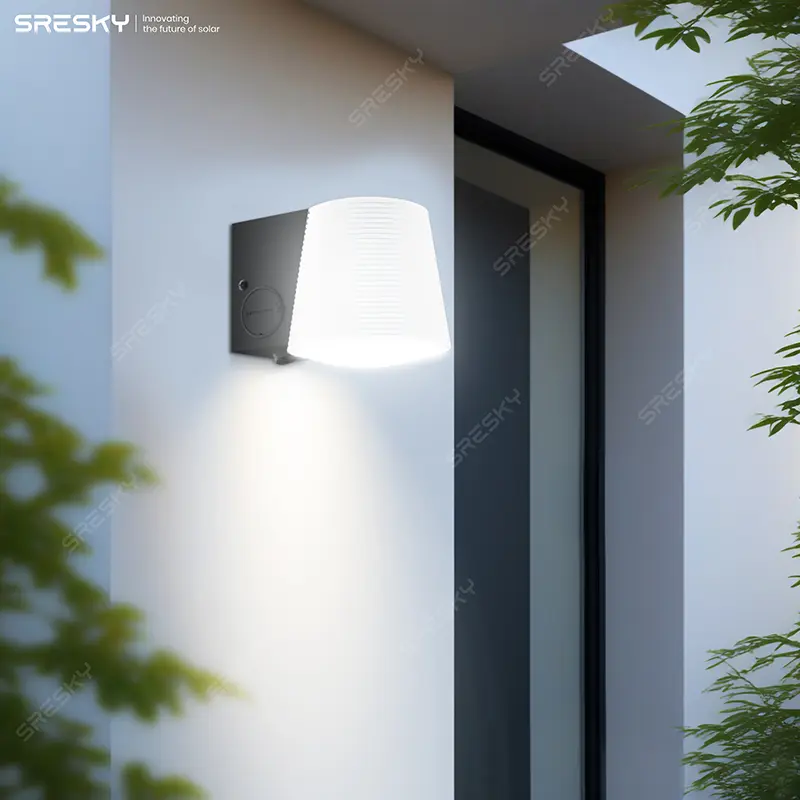
Core Pillar 3: PIR Motion Sensing — Building Adaptive Lighting Systems
PIR (Passive Infrared) sensing is the intelligent control core of modern solar lights, enabling “on-demand” lighting.
How PIR Balances Efficiency and Safety
PIR sensors detect heat sources (humans, vehicles) and instantly trigger illumination. The benefits include:
-
Extended Battery Life: 2–3× longer runtime during rainy seasons
-
Enhanced Security: Sudden illumination deters intruders
-
Reduced Light Pollution: Lights operate only when needed
Many Sottlot models, such as the MARS series, use 120° PIR sensors for efficient detection.
Key PIR Parameters to Check
-
Detection Angle: 120° standard for commercial use
-
Detection Range: 4–5m for corridors; 8m for open areas
-
Smart Modes: Multi-mode designs (e.g., constant, motion-activated) are recommended
Testing Tip: PIR response time should be <1 second.
Core Pillar 4: Material Selection — Defining Durability & TCO
Material quality has a direct impact on lifespan and total cost of ownership (TCO).
Material Comparison: ABS vs. PC vs. Aluminum
ABS:
Cost-effective, good impact resistance; suitable for budget projects
Example: MEGA SGL-12
PC:
High impact resistance, excellent heat tolerance
Example: CUBE series (ABS + PC combination)
Aluminum:
Best heat dissipation and corrosion resistance; ideal for severe climates
Examples: BELL SGL-21WA, ALPHA series
TCO Insight
Low-cost plastics may yellow or crack, increasing replacement rates by 50%. Aluminum and high-grade PC reduce maintenance by 40% and deliver better long-term value. Sottlot’s aluminum products demonstrate double the lifespan in salt-spray tests.
Sottlot Solution Spotlight — From Specifications to Real Deployment
Sottlot, a subsidiary of SRESKY, is known for its SRE-MESH smart solar networking system.
Example 1: CUBE Series — Versatile Modern Design
CUBE SWL-25: 1000 lm, IP65, ABS & PC, Type IV distribution
Ideal for office buildings and campus walkways.
Example 2: MESA Series — Aesthetic + Practical
MESA ESL-63S: 1000 lm, adjustable angles, 4 modes, PIR
Ideal for hotel entrances and commercial facades.
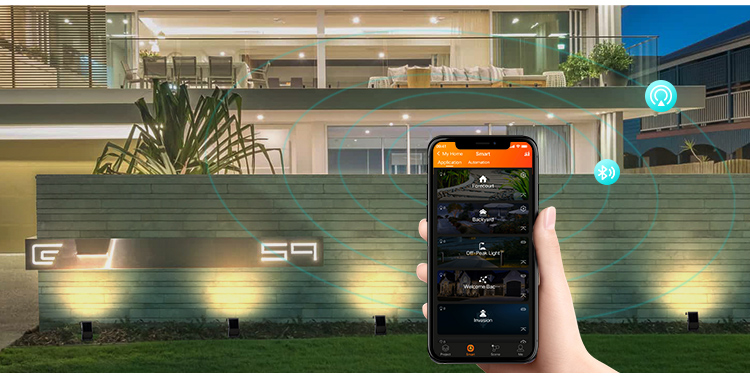
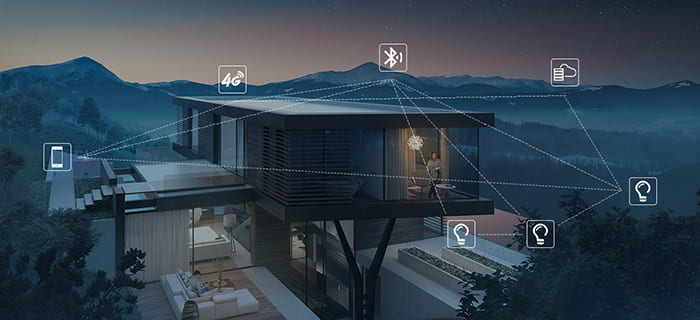
SRE-MESH System
Enables networking, remote monitoring, and adaptive lighting controls for large-scale projects.
Conclusion: Make the Smartest Solar Lighting Investment for 2025
Successful commercial solar wall light procurement depends on:
-
Selecting appropriate lumens
-
Matching IP ratings to environmental conditions
-
Leveraging PIR sensing for energy-efficient security
-
Choosing durable materials to reduce TCO
Choose Sottlot for reliable solar lighting solutions and project-specific technical support.