 English
 French
 German
 Italian
 Portuguese
 Spanish
Across Latin America’s vast landscapes—from Mexico’s arid plateaus to the edges of Brazil’s Amazon rainforest—limited electricity infrastructure has long constrained rural development. According to data from the World Bank and the International Energy Agency, while Latin America’s overall electrification rate has reached 97%, approximately 17 million people still live in remote communities without electricity or with unreliable power. These regions often feature complex terrain and dispersed populations, making traditional grid-extension projects costly and difficult to maintain.
For government contractors, lighting distributors, and infrastructure developers, this challenge presents an important question: how can the region’s abundant solar resources be harnessed to deliver reliable, sustainable public lighting to remote communities? The Solar Street Lights Latin America market is experiencing rapid growth, with off-grid public-lighting solutions becoming central to rural electrification projects.
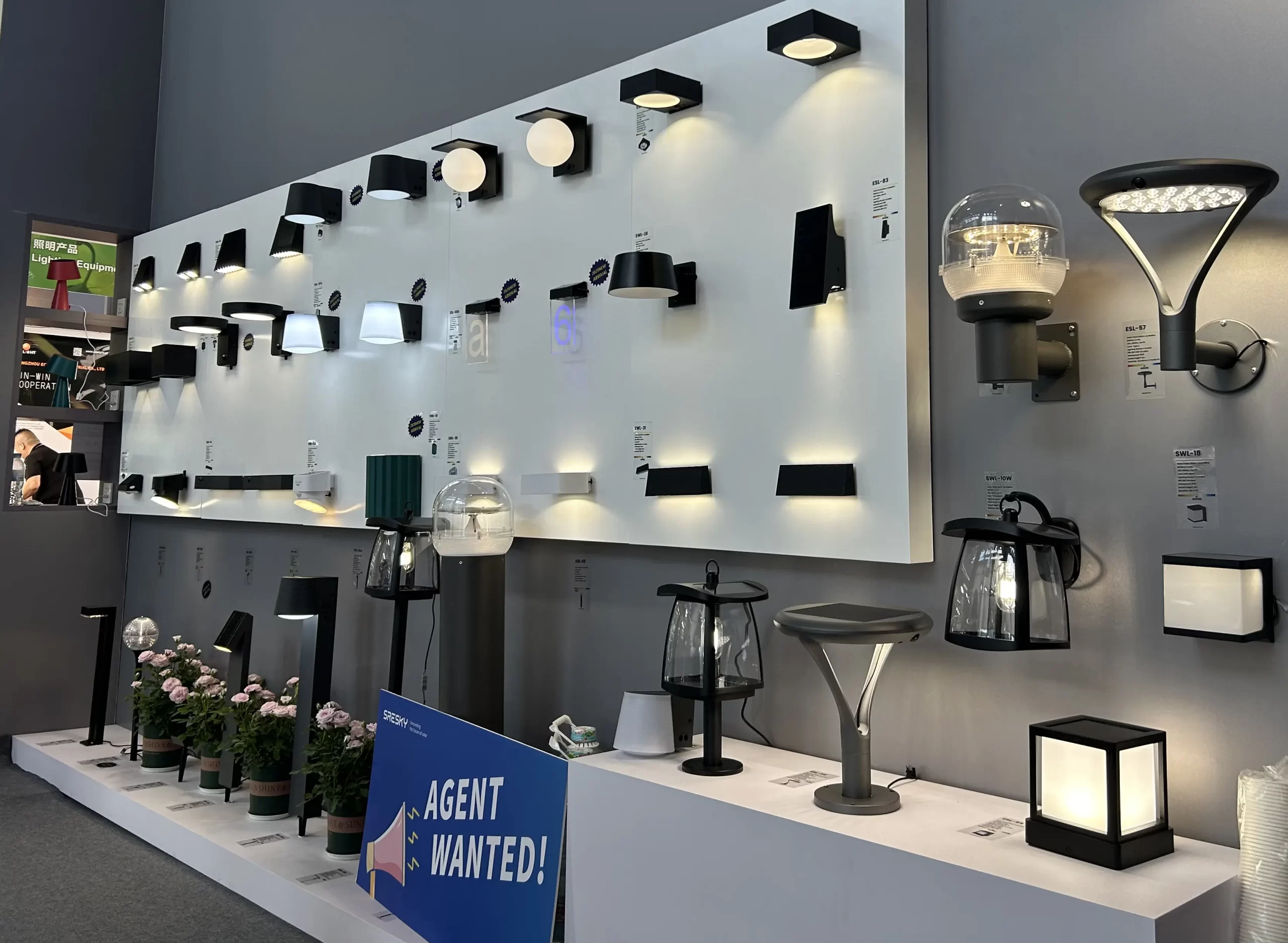
As a global leader in smart solar lighting solutions, SRESKY’s subsidiary Sottlot leverages more than two decades of R&D expertise to help close this gap through high-performance off-grid lighting technology. Focused on building a solar-powered future, Sottlot’s product portfolio—including solar street lights, floodlights, and wall lights—has been deployed in more than 70 countries and regions, accelerating Brazil’s solar-infrastructure upgrades.
1. Lighting Challenges in Remote Latin American Regions
The energy landscape in Latin America—particularly in Brazil and Mexico—underscores the urgency of rural electrification. In Brazil, rural communities in the Amazon and the arid Northeast often lack access to urban grids, limiting nighttime activities and increasing safety risks. According to Brazil’s Energy Research Office, despite the nation’s electrification rate exceeding 99%, millions in remote rural areas still rely on diesel generators or candles for lighting—solutions that are costly and harmful to health and the environment.
Mexico faces similar challenges. Rugged terrain in its northern highlands and southern mountains results in only about 90% grid coverage in rural regions, leaving roughly two million households without electricity.
The high cost of extending traditional grids to remote areas remains a major barrier. An International Energy Agency report shows that rural electrification projects in Latin America can cost thousands of dollars per household, including line installation, substation construction, and ongoing maintenance. In regions with complex terrain or frequent flooding, delays and failures are common, resulting in unstable power supply. Climate change further intensifies extreme weather events—such as floods in Brazil and hurricanes in Mexico—placing even greater stress on existing infrastructure.
In this context, Sottlot, a subsidiary of SRESKY, plays a pivotal role. Through its SRE-MESH smart-lighting system and efficient solar technology, Sottlot delivers grid-independent lighting solutions that help governments and businesses reduce costs while improving reliability. Founded in 2021, Sottlot applies its parent company’s patented technologies—including more than 60 patents and over 800 certifications such as ISO9001, ISO14001, CE, ROHS, and CB—to support sustainable rural electrification projects across Latin America.
2. Market Insight: Why Does Latin America Need High-Performance Off-Grid Lighting?
Demand for high-performance off-grid lighting in Latin America is driven by both government policy and geographical realities. In recent years, governments have advanced “last-mile” electrification programs to meet the United Nations Sustainable Development Goal 7 (Affordable and Clean Energy). In Brazil, the “Luz Para Todos” (Light for All) program has connected 3.3 million rural households to electricity since 2004, benefiting nearly 16 million people—while increasingly integrating solar-based solutions. These initiatives promote renewable microgrids and solar lighting through subsidies and public-private partnerships.
In Mexico, the Ministry of Energy is implementing dozens of rural electrification projects across 19 states, prioritizing solar lighting for remote communities. The World Bank and the National Renewable Energy Laboratory also provide technical support to accelerate solar-infrastructure development in both countries.
Geography magnifies this opportunity. Latin America benefits from more than 2,000 hours of sunshine annually, with particularly strong solar radiation in northern Mexico and northeastern Brazil. Yet challenging terrain, high temperatures exceeding 40 °C, and persistent humidity place heavy demands on equipment. Conventional fixtures often fail due to overheating or poor waterproofing, while Sottlot’s high-performance solar lights, featuring aluminum casings and intelligent thermal management, are engineered to withstand these extremes.
Industry trends reinforce this momentum. Major exhibitions—such as the 2025 Hong Kong International Lighting Fair—showcase rapid innovation in solar lighting, and Latin American buyers are increasingly seeking durable, long-life solutions. Market research indicates the global solar street-light market will reach $5.4 billion by 2025 and grow to $11 billion by 2035. In South America, the outdoor LED lighting market is also expanding steadily, with the solar segment growing even faster. As investment flows rise, government contractors and distributors are actively pursuing reliable off-grid lighting solutions.
3. Sottlot’s Technological Adaptability: Built for Extreme Environments
Sottlot designs its products around the realities of harsh Latin American environments, integrating advanced technology to ensure long-term reliability. As a subsidiary of SRESKY, it benefits from a strong R&D foundation and a 30,000-square-meter manufacturing facility, with continuous recognition as a National High-Tech Enterprise in China for ten consecutive years.
High-Temperature Resistance & Thermal Management: Aluminum Housing and Intelligent Control
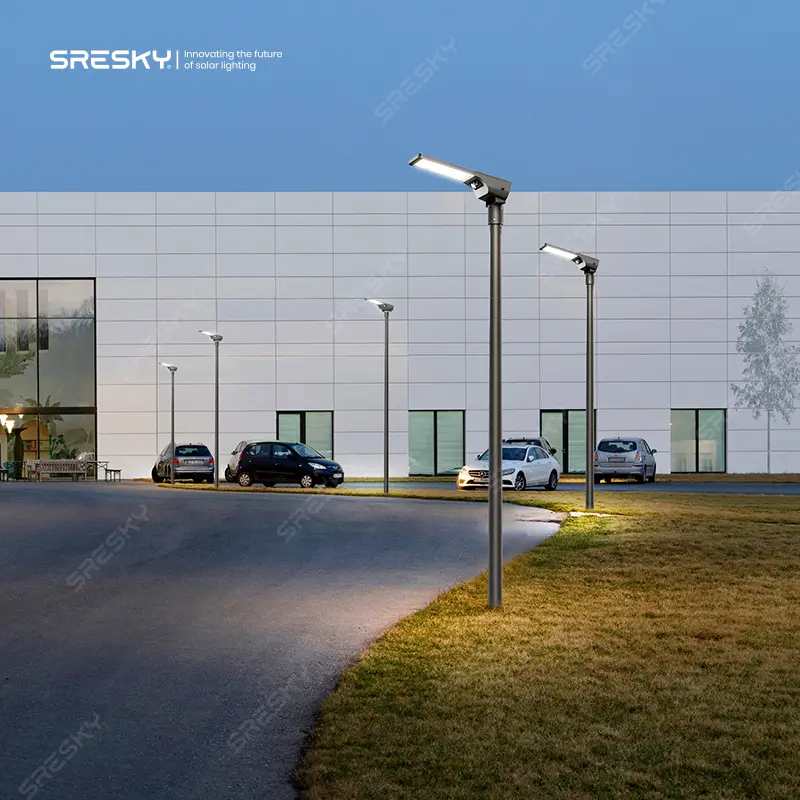
Latin America’s intense heat and UV exposure present major challenges. Sottlot adopts aluminum housings and high-strength PC materials to deliver outstanding weather resistance. For example, the ALPHA SSL series (SSL-53/56/59, 3000–9000 LM), designed for large-scale projects, features IP65 protection and intelligent thermal-management systems—such as rain sensors and LED displays—to prevent battery overheating. In humid Amazonian environments, this design extends battery life beyond five years. Likewise, the URANUS series floodlights maintain stable output even at sustained high temperatures.
High-Efficiency Solar Conversion and Lithium-Ion Storage
All Sottlot products use high-efficiency monocrystalline panels with conversion rates above 20%, paired with large-capacity lithium-ion batteries that ensure all-night operation—even during cloudy or rainy seasons. Optical-lens technology and intelligent motion sensing further optimize power usage and extend operating time.
Installation Flexibility for Complex Terrain
Because Sottlot systems are fully off-grid, they eliminate trenching and complicated wiring, making them ideal for mountainous regions and rainforest communities. Multiple mounting options and compact installation heights reduce project costs and accelerate deployment—supporting national solar-infrastructure initiatives across Brazil and beyond.
5. Conclusion: Choosing a Trusted Partner
In the Latin American market, trust is built on proven quality. With 20 years of manufacturing experience, more than 800 international certifications, and a global sales network, SRESKY (Sottlot) has become a preferred partner for governments, contractors, and distributors. Its products deliver more than lighting—they provide Sottlot Solar Solutions that are off-grid, easy to install, and built for long-term reliability.