 English
 French
 German
 Italian
 Portuguese
 Spanish
Against the backdrop of intensifying global climate change, the frequency and severity of extreme weather events such as typhoons and sandstorms continues to rise. According to reports from the International Energy Agency (IEA) and the World Meteorological Organization (WMO), extreme weather events worldwide caused infrastructure losses exceeding trillions of dollars by 2025, with outdoor lighting systems particularly vulnerable due to their exposure to harsh environments. Solar Lights for Extreme Weather have become a focal point for engineers and distributors, as traditional fixtures often fail rapidly under typhoon-force winds, torrential rain, or the abrasive effects of dust storms, leading to high maintenance costs and safety hazards. For customers, selecting IP65 Solar Street Lights or Dustproof Outdoor Lighting solutions is not merely a technical requirement but a critical factor in ensuring long-term project reliability.
As a subsidiary of SRESKY, Sottlot is dedicated to innovating solar lighting technology. With 20 years of R&D expertise and over 800 international certifications (including ISO9001, ISO14001, CE, ROHS, and CB), Sottlot provides Typhoon Resistant Solar Lights and Coastal Lighting Solutions to global clients. Centered on industrial-grade protection standards, Sottlot‘s product line empowers contractors to deploy Sottlot Solar Technology in Southeast Asian coastal zones or Middle Eastern desert regions, delivering “set-and-forget” efficient lighting. This article explores how Sottlot leverages advanced materials and intelligent design to withstand extreme weather challenges and enhance project resilience.
1. Infrastructure Challenges Amid Climate Change
Extreme weather increasingly impacts outdoor lighting systems. Typhoons, such as Southeast Asia’s tropical storms, often bring winds exceeding 200 km/h and torrential rain, causing structural damage to fixtures or electrical short circuits. According to Penn State research, lightning and storms can directly damage transmission infrastructure, while dust storms in the Middle East and North Africa reduce solar panel efficiency by over 30% through dust accumulation. These events not only disrupt lighting but also increase safety risks, such as rising nighttime road accident rates.
For clients like municipal contractors and distributors, the pain points are clear: short equipment lifespans necessitate frequent replacements, with maintenance costs consuming 20–30% of project budgets. Traditional grid-dependent lighting risks power outages during storms, while solar fixtures—though autonomous—face dust coverage or water corrosion without adequate protection. Sottlot‘s commitment lies in redefining reliability: ensuring stable operation under extreme conditions through IP65-rated protection and smart sensors, helping customers reduce total cost of ownership (TCO) and enhance brand credibility.
2. Coastal & Typhoon Zones: Beyond Water Resistance
Coastal areas face dual typhoon threats: torrential rain with high-pressure water jets and salt spray corrosion. Sottlot‘s protective strategy goes beyond basic waterproofing by integrating multi-layered technologies, ensuring Typhoon Resistant Solar Lights remain stable in winds up to 180 mph.
Waterproof Sealing Technology: Deep Dive into IP65 Protection
An IP65 rating signifies complete dust protection (6 = no dust ingress) and resistance to low-pressure water jets (5 = water sprayed from any direction causes no damage). During typhoons, rain often strikes fixtures horizontally. Sottlot‘s ALPHA Series and ROBUSTO Series employ precision sealing processes to shield internal circuits from water ingress. The ALPHA Series delivers 3,000–9,000 LM brightness, with a TYPE-4M lens covering wide areas. Its PIR sensor (120°/8m) enables intelligent energy savings. Even under continuous heavy rain, IP65 protection prevents short circuits and extends lifespan to over 5 years.
Corrosion-Resistant Materials: Aluminum and PC Synergy
Salt spray accelerates metal corrosion, threatening coastal lighting fixtures. Sottlot selects high-quality aluminum combined with polycarbonate (PC), as in the URANUS Series and ALPHA Series. This combination ensures structural integrity under strong wind loads and offers outstanding oxidation resistance. Even with year-round coastal exposure, aluminum maintains appearance and functionality, while PC ensures high light transmission and impact resistance, ideal for Coastal Lighting Solutions.
Smart Rain Sensor: Weather-Adaptive Technology in the ALPHA Series
The ALPHA Series incorporates a rain sensor that detects humidity during typhoons or rain, automatically switching the system to low-power mode to protect the Li-ion battery from over-discharge. Combined with an LED display showing battery status and an expansion port, this design ensures continuous illumination during storms, providing reliable support for emergency response.
3. Desert and Arid Zones: Dual Challenges of Dust and Heat
Sandstorms in desert regions can significantly reduce solar panel efficiency, as accumulated dust absorbs sunlight and causes energy losses of 20–30%. High temperatures also threaten battery stability. Sottlot‘s Dustproof Outdoor Lighting solution addresses these challenges with comprehensive protection.
Dustproof Sealing: IP65-Rated Sand Barrier
IP65 dust rating ensures complete dust ingress prevention, ideal for sandstorm environments. The BLOCK SWL-35and CUBE SWL-25employ dense assembly techniques to block fine sand particles from entering circuitry and battery compartments, preventing short circuits or overheating, crucial for long-term stability in desert projects. In Middle Eastern hinterlands, this design reduces cleaning frequency and lowers maintenance costs.
High-Temperature Resistance: Aluminum Housing Advantages
Extreme heat can cause lithium batteries to swell or fail. Sottlot consistently employs aluminum for heat dissipation, as in the MESA ESL-83 and URANUS Series. Aluminum’s high thermal conductivity rapidly expels heat, ensuring stable battery operation in environments exceeding 50°C. Combined with monocrystalline silicon solar panels, conversion efficiency remains above 20% even under extreme heat.
Optical Lens Durability: Resisting Sand Abrasion
Sand particles reduce light transmission. Sottlot uses high-strength PC lenses with anti-glare designs, such as the ROBUSTO Series featuring dual PIR sensors (120°×2, 5m range). PC material resists scratches, ensuring long-term luminous efficiency and clarity, ideal for dusty environments.
4. Sottlot’s All-Weather Star Product Recommendations
Sottlot‘s product line covers diverse scenarios. Recommendations optimized for extreme weather include:
Large-scale Projects: ALPHA Series
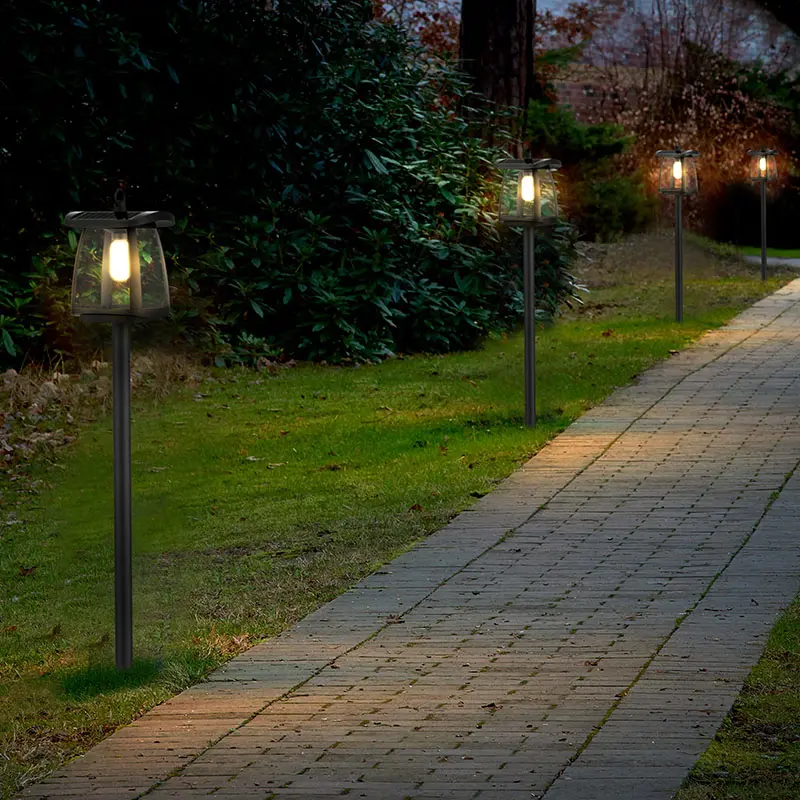
Flagship streetlight with full aluminum & PC body, IP65 protection, and rain sensor. Delivers up to 9,000 LM brightness with Type-4M lens, 3 modes, and PIR 120°/8m. Suitable for coastal municipal roads, withstanding typhoon wind loads.
Commercial & Public Landscapes: ROBUSTO & URANUS Series
ROBUSTO features rugged construction, IP65 rating, and aluminum heat dissipation—suited for desert parks. URANUS delivers uniform illumination with dust/water resistance, ideal for arid communities.
Modern Building Facades: BLOCK & CUBE Series
BLOCK SWL-35 (1,000 LM, 120° lens, IP65) features an ultra-modern design with ABS & PC materials, blending aesthetics and protection. CUBE SWL-25 (1,000 LM, Type-IV distribution, IP65) offers optimized coverage for building illumination in dusty regions.
These products utilize lithium-ion batteries and monocrystalline silicon panels, supporting multi-mode operation with an installation height of 2.5–3 m for easy deployment.
5. Conclusion: Choose Sottlot, Weather Any Storm
Extreme weather conditions pose the ultimate test of product quality. With 20 years of manufacturing expertise, a 30,000-square-meter factory, and a robust R&D team, SRESKY (Sottlot) has deployed solutions in over 70 countries worldwide. Our products have maintained National High-Tech Enterprise certification for a decade, empowering you to overcome challenges in Solar Lights for Extreme Weather.