 English
 French
 German
 Italian
 Portuguese
 Spanish
Against the backdrop of the global energy transition in 2026, emerging markets are witnessing a sharp rise in demand for flexible, efficient, and low-maintenance lighting solutions. Industry reports project that the global solar lighting market will exceed USD 15 billion, growing at an annual rate of approximately 12%. In particular, the expansion of green infrastructure and microgrid lighting in emerging economies is reshaping procurement strategies, with sustainability becoming a central decision driver.
1. 2026 Global Market Context: The Rise of Green Infrastructure and “Microgrid” Lighting
By 2026, the global solar lighting market is undergoing a structural transformation. Driven by climate change mitigation goals and increasing energy security concerns, emerging regions such as Southeast Asia, Latin America, and the Middle East are accelerating green infrastructure development. Market projections indicate that the solar lighting systems market will expand from USD 9.91 billion in 2025 to USD 24.6 billion by 2035, achieving a compound annual growth rate (CAGR) of 15.90%.
This growth is largely fueled by the adoption of “microgrids”—small, independent solar-powered systems that provide reliable lighting in remote or grid-unstable areas without reliance on conventional power infrastructure.
Procurement trends in emerging markets are shifting away from traditional large-scale streetlights toward compact, modular solar lighting products. These fixtures enable rapid deployment and increasingly integrate smart IoT features such as remote monitoring and automatic performance adjustments to respond to changing environmental conditions.
For example, in countries such as India and Brazil, government subsidy policies actively promote the procurement of high-efficiency solar LED lighting. Demand for solar LED solutions in emerging markets is projected to grow at a CAGR exceeding 15% through 2026.
At the same time, geopolitical dynamics and the integration of AI technologies are reshaping global supply chains. China, while expected to experience its first slowdown in solar installations in 2026, will remain the dominant global manufacturing hub. This trend is driving procurement in emerging markets toward cost-effective, system-level solutions rather than standalone products, helping customers achieve energy independence and carbon reduction targets more efficiently.
2. Core Growth Region Analysis
By 2026, procurement demand for small solar lighting fixtures will concentrate in two primary segments: outdoor tourism and high-end glamping, as well as community infrastructure and public safety. Growth in both segments is driven not only by expanding market demand but also by technological advancements, particularly in high-efficiency battery systems and intelligent sensing technologies.
Outdoor Tourism & Luxury Glamping: Combining Ambience with Installation Ease
The global tourism industry’s shift toward eco-friendly operations is accelerating demand for upgraded lighting solutions in premium campsites and eco-resorts. In Southeast Asia (e.g., Thailand and Indonesia), Latin America (e.g., Mexico), and the Middle East (e.g., the UAE), glamping projects emphasize zero-impact installation methods and atmospheric lighting design.
Market forecasts indicate that solar lighting will achieve substantial penetration in outdoor hospitality facilities, with the global solar lighting market projected to reach USD 11.7 billion by 2030.
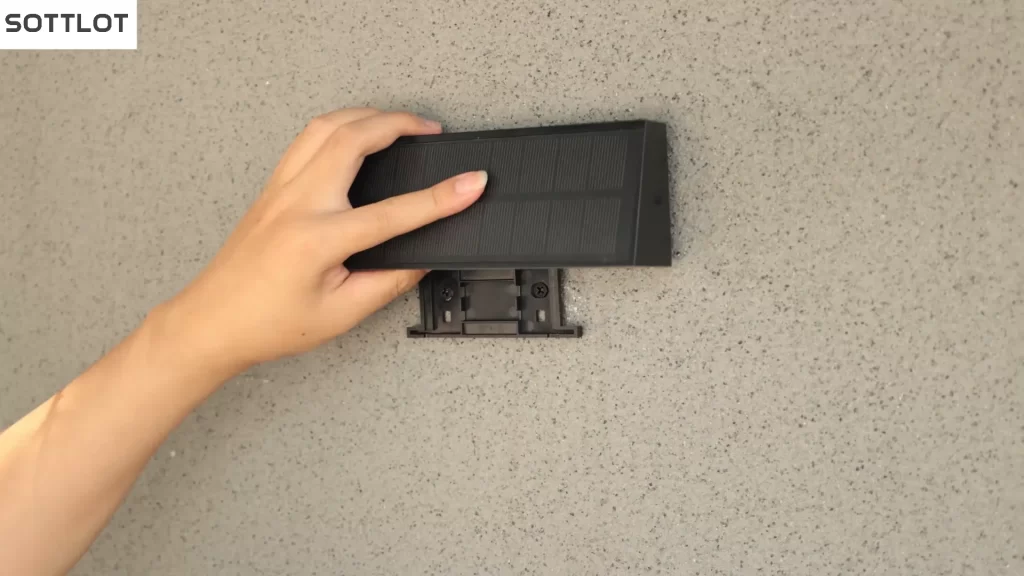
Application Scenario: Sottlot’s compact wall lights and lawn lights (e.g., the FLAG series) require no trenching or cable installation, preserving native landscapes and making them a preferred solution for resort pathways. These fixtures support rapid deployment, delivering soft, long-lasting illumination within 5–10 minutes per unit to enhance guest experience. In high-irradiance tropical regions, monocrystalline silicon solar panels ensure stable performance even during cloudy conditions, eliminating dependence on grid electricity.
Trend Insight: Buyers increasingly favor visually refined products featuring modern minimalist designs that blend seamlessly with natural environments. By 2026, procurement in this segment is projected to grow by more than 20%, with a strong focus on IP65 waterproof ratings and multi-mode lighting configurations to withstand variable outdoor conditions.
Community Infrastructure & Public Safety: Lighting Solutions for Remote Areas and Urban Renewal
As global urbanization continues, demand for basic safety lighting is rising in peripheral communities and remote villages. Emerging regions such as Africa and South Asia are actively addressing grid limitations through solar lighting deployment. Industry reports estimate that the solar lighting systems market will reach USD 29.17 billion by 2032, growing at a CAGR of 14.96%.
Application Scenario: Community lighting projects increasingly favor solar luminaires equipped with passive infrared (PIR) motion sensors to address security requirements while minimizing maintenance costs. For example, rural renewal programs in India commonly deploy compact solar wall lights to illuminate streets and public squares, ensuring nighttime safety without the need for expensive wiring infrastructure.
Trend Insight: Procurement teams prioritize products with durable construction and long-life batteries to optimize total lifecycle costs. As microgrid adoption accelerates, procurement in this sector is shifting toward bulk customization, with emerging markets expected to account for more than 40% of global demand by 2026.
3. New Procurement Standards: From “Initial Purchase Cost” to “Total Lifecycle ROI”
Traditional procurement models have historically focused on upfront purchase prices. However, by 2026, buyers are increasingly evaluating total lifecycle return on investment (ROI), including installation, maintenance, energy savings, and environmental compliance costs. Industry analysis projects the solar LED lighting market to reach USD 3.5 billion by 2030, underscoring the growing emphasis on efficiency and sustainability.
Key procurement criteria include:
-
Energy Efficiency: Preference for high-conversion solar panels and lithium-ion batteries to achieve ROI within 3–5 years.
-
Certification & Compliance: Products must comply with international standards such as ISO, CE, and RoHS to meet import regulations in emerging markets.
-
Smart Integration: PIR sensors and adjustable color temperature settings are becoming standard, enhancing operational flexibility.
-
Supply Chain Stability: Suppliers with global warehousing (e.g., the U.S.) and diversified manufacturing bases (e.g., Malaysia) are favored to reduce logistics risks.
This shift enables project owners to realize 20–30% cost savings in budget-sensitive deployments while significantly improving sustainability performance.
4. Product Recommendations
As a brand under Sresky, Sottlot provides customized solar lighting solutions for emerging markets, supported by more than 800 certifications and over 60 patents. Below are two recommended product series tailored to different project scales.
FLAG Series (SGL-15L/S): Cost-Performance Excellence with Modern Minimalist Design
Designed for cost-sensitive projects, the FLAG Series stands out for its refined aesthetics and reliable performance:
-
Design Aesthetics: Modern minimalist styling integrates seamlessly into commercial and residential environments, making it ideal for outdoor tourism facilities and community pathways.
-
Core Configuration: High-efficiency monocrystalline silicon solar panels paired with lithium-ion batteries deliver a stable 500 lm output, even under low-light conditions. A color rendering index (CRI) greater than 70 ensures natural lighting quality.
-
Durability: IP65 waterproof rating. L-type and S-type models utilize aluminum and high-strength ABS materials, respectively, offering flexible cost options while ensuring long-term outdoor durability. Suitable for installation heights of 2–3 meters using screws or cable ties.
-
Application Advantages: In glamping projects, the series enhances ambient lighting and brand perception. ROI analysis shows that its zero-electricity design can reduce annual operating costs by more than 50%.
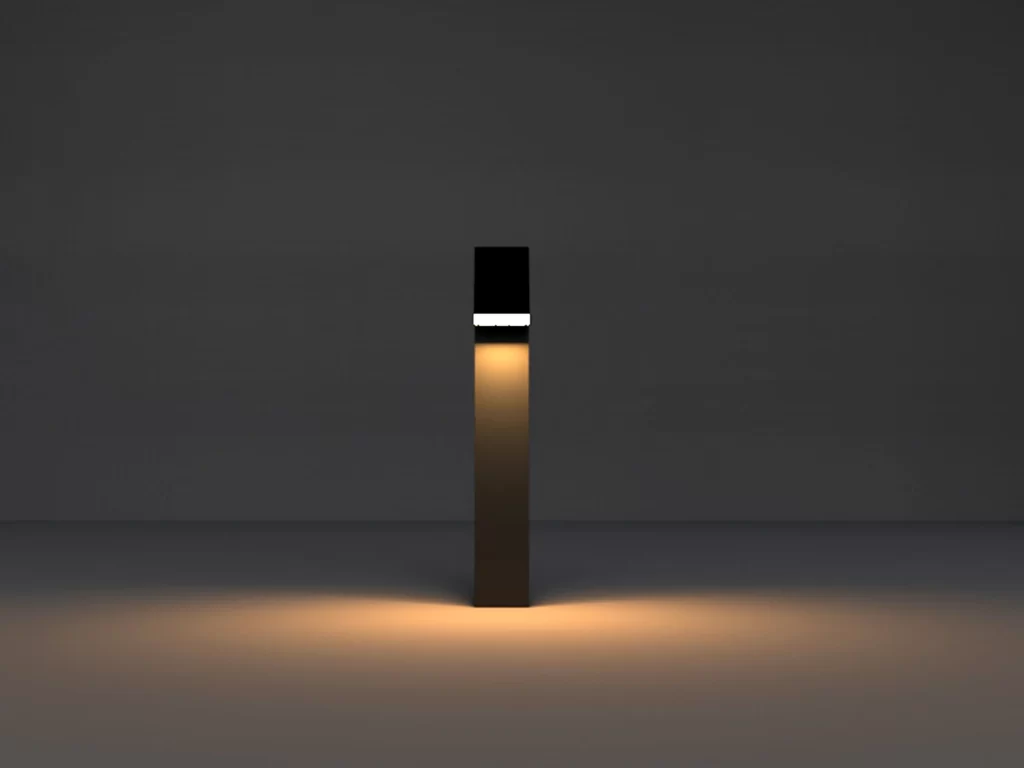
URANUS Series (SWL-20D/40D): The Preferred Solution for Small Commercial Projects
The URANUS Series is engineered for slightly larger small-scale applications and is positioned as the preferred luminaire for compact commercial lighting projects:
-
High Luminous Output: Available in 3,000 lm and 6,000 lm options with a 90° lens, suitable for parking lot entrances, small sports areas, and community plazas, ensuring uniform illumination.
-
Adjustable Color Temperature: Supports switching between 3000K warm light and 5700K white light to meet varying functional and aesthetic requirements.
-
Smart Features: Integrated PIR sensor (120° detection angle, 5 m range) with four lighting modes for automated energy optimization. IP65-rated, with an aluminum alloy and PC housing for enhanced durability.
-
Application Advantages: With an estimated lifespan exceeding 50,000 hours, the series significantly reduces maintenance frequency and delivers strong long-term ROI for community infrastructure projects.
All products carry global certifications, support bulk procurement, and are designed to meet the diverse requirements of emerging markets.
Conclusion
The 2026 solar lighting market will be led by brands that successfully combine sustainability with measurable ROI. Sottlot delivers more than lighting products—it offers a low-carbon, high-efficiency deployment model. Through strategic application of solutions such as the FLAG Series, customers can achieve substantial cost reductions while maintaining high visual and performance standards.