 English
 French
 German
 Italian
 Portuguese
 Spanish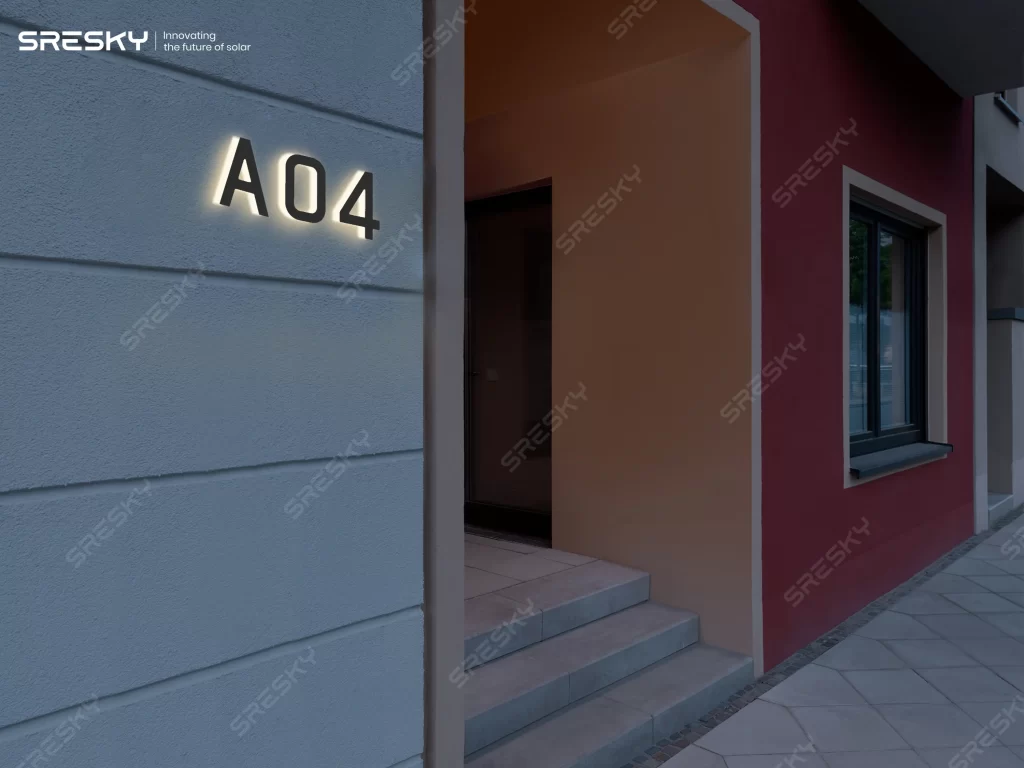
I. Technical Evolution and Pain Point Analysis of Modern Building Exterior Signage Lighting
In the architectural design of commercial real estate, townhouses, and industrial parks, the nighttime visibility of house numbers is critical for logistics delivery, visitor guidance, and emergency response. However, during the implementation phase, exterior illuminated signage has long faced a trade-off between technical feasibility and cost efficiency.
[Comparison of Traditional Exterior Illuminated Signage Solutions]
│
┌───────────────────────┴───────────────────────┐
▼                                               ▼
[Traditional Wired Illuminated Signage]          [First-Generation Traditional Solar-Powered Signage]

• High labor costs for wall chiseling, concealed wiring installation, and restoration work
• Requires high-altitude wiring and additional transformers

                                                  • Visible metal grid lines on the front surface reduce the aesthetic appeal of buildings
                                                  • Uneven illumination with noticeable light spots or glare
                                                  • Lack of intelligent control during cloudy or rainy conditions, resulting in frequent power interruptions
To balance architectural aesthetics, zero-carbon emission requirements, and total cost of ownership (TCO), next-generation modular solar-powered illuminated house signs—integrating Back-Contact (BC) solar cells with an intelligent dynamic power management system—are gradually becoming the preferred choice for overseas construction contractors and lighting distributors.
II. Analysis of Core Technologies: Engineering Advantages of BC Cells and 3D Halo Design
1. Application of Back-Contact (BC) Cells in Micro-Solar Devices
Traditional monocrystalline and polycrystalline silicon panels typically feature silver main busbars and fine grid lines on the front surface. These components not only block part of the incoming sunlight but also affect the visual appearance of modern building facades.
The application of BC (Back-Contact) solar cells in compact house number signage delivers two major engineering improvements:
Maximized Effective Light-Receiving Area
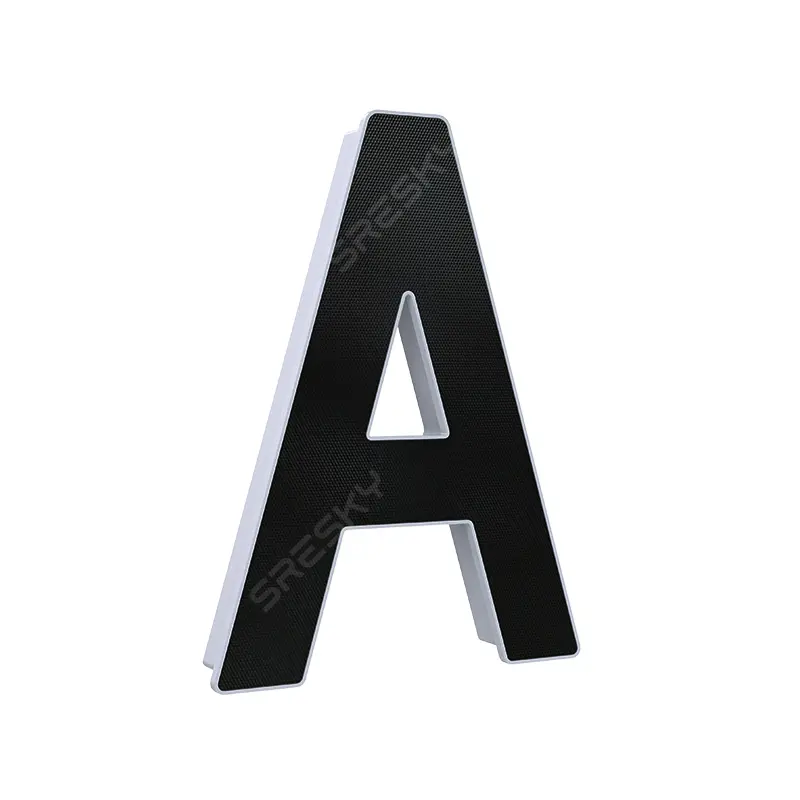
BC technology relocates all PN junctions and electrode grid lines to the rear side of the solar cell, leaving the front surface completely free of grid-line obstructions. Within the limited installation area on the top of a house number sign, this design achieves higher photovoltaic conversion efficiency and improved light absorption performance.
Seamless Architectural Integration
The pure black BC panel naturally blends with the top surfaces of 3D letters and numbers, creating a refined industrial design aesthetic in daylight. This eliminates the visual clutter commonly associated with traditional solar panels installed on building facades.
[Traditional Front-Grid Cells]                   [BC (Back-Contact) Cells]

┌───────────────────┐                            ┌───────────────────┐
│ ║ ║ Grid-line     │                            │ Pure black,       │
│ shading           │                            │ grid-free         │
│                   │                            │ light-receiving   │
│                   │                            │ surface           │
└───────────────────┘                            └───────────────────┘

(Front metal electrodes block light)             (All electrodes moved to the back)
2. 3D Floating Diffused Backlighting with Multi-Color Temperature Adaptation
High-quality signage lighting requires that “the light is visible, but the light source is hidden,” preventing glare and reducing overexposure when captured by cameras or recording equipment.
Diffused Beam Design
By combining 2835 warm white LEDs and 5050 RGB LEDs with a high-transmittance diffusing housing, the system evenly projects 15 lumens of light backward onto the wall, creating a three-dimensional floating halo effect.
Color Temperature Adaptation for Different Applications
The 3000K warm white light (Ra ≥ 70) meets the warm and elegant visual requirements of upscale residential communities and boutique hotels. The red, green, and blue RGB modes are suitable for creating festive atmospheres or highlighting signage in specific commercial environments.
III. System Reliability and Weather-Resistant Design Under Extreme Climatic Conditions
Outdoor illuminated signage requires extremely high weather resistance. In engineering procurement, customer complaints caused by power failures during rainy conditions or aging enclosures are major concerns for B2B distributors.
[System Weather-Resistance Assurance Architecture]
| ALS Intelligent Power Regulation | Wide-Temperature Lithium Battery Management | Structural Protection |
|---|---|---|
| 4-Day Continuous Rainy-Day Battery Life Guarantee | Stable discharge from -20°C to +60°C | IP65 Water and Dust Resistance / IK04 Impact Resistance |
ALS (Adaptive Lighting System) Intelligent Battery Life Algorithm
The built-in system dynamically adjusts LED drive current according to the remaining battery capacity. Even during four consecutive days of cloudy and rainy weather, the intelligent power-reduction strategy ensures that the lights remain illuminated throughout the night.
Wide-Temperature Operating Environment
The system supports stable discharge operation at ambient temperatures ranging from -20°C to +60°C (charging temperature: -10°C to +55°C), making it suitable for both cold high-latitude regions and tropical desert climates.
Weather-Resistant Materials and Protection
The housing is manufactured from high-strength, UV-resistant polypropylene (PP), preventing yellowing and brittleness caused by prolonged outdoor UV exposure. It features an IP65 water and dust resistance rating and an IK04 impact resistance rating.